
Introduction
Proper nutrition for children is one of the most important investments parents can make for their child's future. However, even the most caring parents may unintentionally make mistakes that affect their child's growth, health, and even eating habits into adulthood. Mistakes that are usually done out of love and concern, but the result can be malnutrition, overweight, micronutrient deficiencies, or the formation of an unhealthy relationship with food.
According to global reports, malnutrition – both in the form of undernutrition and overweight and obesity – is linked to about 45% of child deaths. In 2022, it was estimated that about 149 million children under 5 worldwide suffered from stunting (short height for age) and about 37 million children under 5 were overweight or obese. This means that improper nutrition can lead to both lack of growth and excess weight; two sides of a common coin.
The World Health Organization (WHO) has repeatedly emphasized that optimal nutrition in the 0 to 23 month period can play a decisive role in reducing mortality and morbidity. Estimates show that if all children aged 0 to 23 months were fed according to recommended principles (including breastfeeding and appropriate complementary food), over 820,000 deaths of children under 5 could be prevented each year.
In this article, with a narrative and semi-formal yet evidence-based approach, we review the most important common mistakes parents make in child nutrition from infancy to the end of adolescence and provide simple and practical solutions for each. The goal is for parents to be able to establish healthy eating habits in their child with awareness and calm – habits that will stay with them into adulthood.

Infant Nutrition (0 to 12 Months): The Foundations of Healthy Habits from the First Bites
The first year of life is a period in which the infant's physical and cognitive development occurs at a breathtaking pace. In this same year, the child's emotional relationship with food and the feeling of "security" in eating also form. Many parents in this period face contradictory advice from others: one says give porridge from four months, another warns that giving water to an infant is dangerous.
The main recommendation of the WHO and many scientific societies is that in the first 6 months of life, the infant should be fed exclusively with breast milk and receive no solid food or other drink (even water). If breastfeeding is not possible, standard infant formula should be used. In practice, however, many infants are introduced to juice, herbal tea, or solid food much sooner than they should be.
Estimates show that only about 44% of infants globally are exclusively breastfed until 6 months of age, and in many countries, less than one-quarter of children aged 6–23 months receive adequate and diverse diets appropriate for their age. This means a large portion of children are either introduced to inappropriate foods and drinks too early, or conversely, receive appropriate complementary foods later than necessary.
On the other hand, some mistakes, such as adding salt or sugar to the infant's complementary food, giving honey to a child under one year (with the risk of botulism), or insisting that "the baby must drink every last drop of the bottle," can all threaten the child's health. The reality is that infants have a natural appetite regulation mechanism; if parents pay attention to their signs of hunger and satiety, the risk of overeating or undereating becomes very low.

Common Mistakes in Infant Nutrition
One of the significant mistakes is the premature introduction of complementary feeding, meaning the infant is introduced to porridge, soup, or juice before about 6 months of age. The infant's digestive system is not fully ready to digest solid food in the first months, and this can increase the risk of infection, allergies, and even future obesity.
Another common mistake is excessive delay in starting complementary feeding. If only milk is given to the child after 6–7 months and nutritious solid foods are not added promptly, the likelihood of iron deficiency, stunting, and developmental delay increases.
Some families add salt or sugar to the infant's food to make it "tastier." However, the infant's kidneys cannot excrete excess sodium, and their palate, by unnecessary sweetening, becomes accustomed to sugary tastes from the beginning.
Another serious mistake is giving honey to a child under one year old. Honey may contain a bacterial spore that produces toxins in the infant's intestine, causing infant botulism, a condition that can be very dangerous.
Some parents also believe the infant must finish the bottle or food bowl entirely, otherwise, they are "not full." The result of this insistence is turning mealtime into an experience accompanied by pressure and stress for the infant, even though they clearly indicate they are full by turning their head, closing their mouth, or becoming restless.
Solutions for Infant Parents
Exclusive Breastfeeding up to 6 Months: In the first 6 months, the infant only needs breast milk or standard formula. Breast milk supplies about 87% and formula about 85% of their volume as water; therefore, separate water is usually not necessary, and giving water may even increase the risk of "water intoxication" and disrupt the body's sodium balance. During this time, there is no need for juice, herbal tea, soup, or other liquids.
Timely and Gradual Start of Complementary Feeding: Around 6 months, when the infant can sit with support, control their head, and show interest in food, it's time to start complementary feeding. The first food should be soft, simple, and nutritionally rich, such as iron-fortified cereals, thoroughly cooked meat puree, soft lentils, or pureed vegetables or soft fruits. In the following months, food variety and the number of meals should gradually increase.
Do Not Add Salt, Sugar, or Honey: Do not add salt or sugar to the food of infants under one year. The natural taste of foods is perfectly sufficient for this age, and there is no need to change it with additives. Honey is prohibited until the end of 12 months; after that, it should be consumed in moderation. To create a pleasant taste, natural fruit purées or sweet-tasting vegetables (like pumpkin and carrots) can be used.
Pay Attention to Hunger and Satiety Cues: If you respect the signs of hunger (crying, sucking hands, restlessness) and satiety (turning the head away, closing the mouth, reduced sucking), the infant will naturally regulate the amount they need. The infant should not be forced to eat more than they desire.
Avoid Dangerous Foods: Until one year of age, cow's milk is not suitable as a primary beverage and should only be used in small amounts in cooked foods. Commercial juice, sugary drinks, and hard or round foods (such as nuts, raw carrots, whole grapes, popcorn) are dangerous at this age and should be avoided.

Toddler Nutrition (1 to 3 Years): Managing Picky Eating and Independence
Between the ages of 1 and 3, the child enters a phase where they are discovering "independence" both in movement and personality. This drive for independence is also reflected in eating: the food they ate with appetite yesterday is rejected today, and new foods are viewed with suspicion.
Picky eating is very common at this age. Studies have shown that about 30% to 50% of parents describe their toddler as a "picky eater." This behavior is often normal and part of the growth process, but incorrect parental reactions can exacerbate it.
One of the common mistakes is turning mealtime into a battlefield; at the table, arguments begin over every bite: "Eat! Eat this bite too," "If you don't eat, you'll stay short," and so on. Conversely, some parents bribe the child for every bite: "If you eat this, I'll buy you chocolate." The result of both scenarios is the formation of a tense relationship with food and the child's use of food as a tool for stubbornness or seeking attention.
Another common mistake is using sweet snacks or juice as a quick solution to quiet the child. The child cries, they are given a sweet biscuit; they are tired, we pour them juice; on the way home, we give them a sugary snack for entertainment.
A study in the US showed that almost all (99%) children aged 19–23 months consume an average of over 7 teaspoons of added sugar daily, and about 60% of children have experienced the taste of added sugar before their first birthday. A significant portion of this sugar comes from juices, sweets, and snacks, which we, the parents, often provide.
The American Academy of Pediatrics (AAP) explicitly recommends that children under 1 year should not receive juice at all, and for toddlers aged 1 to 3, a maximum of 120 milliliters (half a standard glass) of juice per day is sufficient, and preferably 100% pure and diluted juice, not sugary drinks.
Another mistake is the long-term dependence on the baby bottle. In many families, the 2 or 3-year-old child still receives a large amount of their energy from milk or even juice in a bottle, especially before bed. This both increases the risk of dental caries and reduces their appetite for solid foods.

Solutions for the Toddler Age
At this age, the parents' main goal should be to create order, calmness, and positive experiences at mealtime, not to ensure a specific amount is eaten "at all costs."
Establish Mealtime Order: Set specific times for three main meals and about two light snacks. If the child is constantly eating something between meals, they won't have an appetite for the main meal. A gap of approximately two to three hours between meals helps to establish natural hunger.
Set a Location and Limited Time for Food: Accustom the child to sit in a high chair or at the table during meals. Following them around the house with a spoon or allowing them to eat while playing takes away focus from the food. A reasonable amount of time (e.g., 20 to 30 minutes) is sufficient for each meal; after that, if they haven't eaten, take the plate away without punishment. This teaches them that mealtime is finite and cannot continue indefinitely.
Introduce New Foods with Patience and Repetition: Toddlers reject many new foods upon the first encounter. Research shows that a child may need to experience a new flavor 10 times or more to accept it. So, if they don't eat a specific vegetable or dish today, offer it again a few days later, in a different form or combination. The important thing is that they are exposed to various foods without pressure or threat.
Avoid Coercion and Bribery: Instead of turning eating into a transaction or a power struggle, allow the child to feel they have control over their own body. Neither "If you don't eat, there are no cartoons" nor "If you eat, I'll buy you chocolate" helps. These methods have a counterproductive effect in the long term, turning food from a natural need into a tool of pressure or reward.
Limit Sugary Snacks and Sweetened Beverages: Reduce the quantity and frequency of sweets, chocolate, sugary biscuits, soda, and commercial juices as much as possible. The child's main drinks throughout the day should be water and milk. If they still use a bottle, gradually limit it and transition to a regular cup or straw cup by around 18 months; specifically, eliminate the nighttime bottle to prevent dental damage.
Parental Role Modeling: Toddlers closely observe their parents' behavior. If you eat fruit and vegetables with enthusiasm, the probability that they will also crave them is higher. Try to eat at least one meal a day with them and with the same foods, both to be a good role model and to give them a greater sense of security.

Preschooler Nutrition (3 to 5 Years): Shaping Eating Habits
Between the ages of 3 to 5, the child's motor and social skills further develop, and they can participate in food selection and preparation. During this period, stable eating habits gradually form – habits that are harder to change later.
One of the common mistakes parents make at this age is the constant use of phrases like "A good child eats all their food" or conditioning dessert on finishing the meal. The fact that a child only has the "right" to dessert after clearing their plate makes them learn from an early age to ignore their body's satiety and eat more than they need to get a reward.
Another mistake is making a separate meal for the picky eater. If we only prepare plain pasta or their special favorite food for the child every night because they don't like the family meal, we are essentially reinforcing their picky eating. The child learns that if they resist enough, their favorite meal will be prepared for them, and they don't need to try new things.
At this age, fast food, ready-made meals, and packaged snacks increasingly enter family life. Parents' busy schedules, lack of time for cooking, and colorful advertisements can all cause the child to consume more chips, puffs, industrial cakes, and soda instead of diverse homemade food.
One of the consequences of a high-sugar, high-calorie, and low-nutrient diet at this age is dental caries in baby teeth. According to WHO statistics, over 530 million children worldwide suffer from decay in their baby teeth. This figure is the result of frequent consumption of sweets and sugary drinks, coupled with insufficient oral hygiene.

Solutions for the Preschool Age
The "One Food for the Whole Family" Rule: At this age, the general rule of the house should be that all family members share a common main meal. It might be necessary to set aside a less seasoned or softer portion of the same food for the child, but they should be exposed to the family's diverse foods. If you have herb rice with fish tonight and the child doesn't like fish, you can add an egg or cheese for their protein intake, but their plate should still include the herb rice so that the smell and taste become familiar.
Eliminate Dessert as a Reward: If fruit, homemade fruit yogurt, or a healthy sweet is to be served after the meal, do so without conditions. Remove the dessert from the "prize" category so that the child does not learn that vegetables or main courses are so bad that they only receive something tastier in exchange for enduring them.
Turn Food into a Fun Experience: Preschoolers enjoy play, imagination, and stories. You can use this trait to introduce healthy foods; for example, create face shapes with fruit and vegetables on the plate, invent characters and stories for the ingredients ("These orange carrots are the little heroes of your body"), and most importantly, involve the child in simple kitchen tasks like washing fruit, mixing salad, or setting the table.
Keep Healthy Snacks Accessible and Unhealthy Ones Out of Sight: Arrange the house so that the child's natural choice is a healthy one. For example, a bowl of cut fruit, finger vegetables (like soft cooked carrots or cucumber), yogurt, cheese, and some soft, chopped dried fruit/nuts should be visible and accessible. Conversely, either don't buy unhealthy snacks like chips, puffs, high-sugar sweets, and soda, or at least keep them out of sight so they don't become the everyday choice.
Promote Oral and Dental Hygiene: Simultaneously with managing sugar, another important habit must be established: regular brushing. The best way is for you to brush your teeth along with the child so they imitate you and consider this a pleasant part of the nightly routine. Limiting the frequency of sweets to a maximum of once per day and brushing afterward can significantly reduce the risk of decay.
Continue Mealtime Order and Avoid Distractions: Now that the child is older, you might be tempted to turn on the TV or tablet during meals so they "eat more easily." But this takes focus away from the food and the feeling of satiety. It's better for screens to be off during mealtime so the child learns to listen to their body, see when they are full, and turn eating into a conscious experience.

Elementary Schooler Nutrition (6 to 12 Years): Developing Independence in Choice
With the child's entry into school, a new world of food choices opens up to them. The school cafeteria, self-service meals, friends' snacks, and colorful advertisements all become part of their "food environment." At this stage, many parental mistakes are no longer just related to the home but also to remote supervision and accompaniment.
One of the most common mistakes is the neglect of breakfast. Mornings are busy and stressful, and many children either go to school without breakfast or start their day with a sweet snack like a pre-packaged cake. Surveys conducted in the US show that in recent years, about 75% of high school students do not eat breakfast every day. This habit usually forms during the elementary school years; if the child does not learn to eat breakfast at this age, they will likely give it up entirely in adolescence.
Another mistake is giving the child complete authority over food choices at school without teaching them principles. When the child receives pocket money every day and can freely buy chips, soda, or sweets from the cafeteria, the chance of making a healthy choice is very low. Or they might spend their lunch money on ice cream and stay hungry until the evening.
On the other hand, families are often busier during this period. There may be less time for cooking, and fast food, takeout, and ready-made meals gradually replace diverse homemade foods. This happens while global statistics show that in the 5- to 19-year-old age group, the rate of overweight has increased from about 8% in 1990 to about 20% in 2022; that is, almost one in five children and adolescents are overweight.
Another significant mistake that is less noticeable is the fading of family meals. Everyone eats according to their own schedule; one in front of the TV, another at a desk, and the child perhaps with a tablet in their room. Meanwhile, numerous studies have shown that children who eat with their family at least a few times a week consume more fruits and vegetables, eat fewer sodas and fried foods, and are even less prone to obesity and certain behavioral and psychological problems.

Solutions for the Elementary Age
Emphasize Breakfast: Breakfast starts the body's metabolism and has a direct effect on concentration and learning in the classroom. Breakfast does not have to be elaborate; a simple combination of bread and cheese, a glass of milk or yogurt, and a serving of fruit is a suitable breakfast for many children. If they don't have a big appetite in the morning, a small but nutritious amount (e.g., a whole-wheat toast with peanut butter and half a banana) is better than going hungry. You can also substitute drinks like banana milk or a fruit and milk smoothie that they can drink on the way to school.
Plan for School Lunch: If the child is taking food from home, with a little creativity, attractive and varied sandwiches and lunch boxes can be prepared, from homemade cutlets and frittatas to baked chicken and steamed vegetables. If they use the school cafeteria, it's best to know the weekly menu and talk to them about healthier choices, without interrogating them in a controlling manner.
Control Purchased Snacks: Giving unrestrained pocket money without education practically means "eat whatever you like." You can agree with your child that, for example, they are allowed to buy a sweet snack from the cafeteria one day a week and bring their own snacks the rest of the days. You can also involve them in weekly shopping, asking them to select a few healthy snacks they like; this participation increases their responsibility.
Continue Healthy Snacks at Home: After school, the child usually comes home tired and hungry. If the first thing they see is chips and biscuits, the choice is obvious; but if homemade smoothies, yogurt, prepared fruit, unsalted nuts, and lightly salted popcorn are available, the chance of a healthy choice will be much higher. The point is to stock the home's shelves wisely instead of relying on "force."
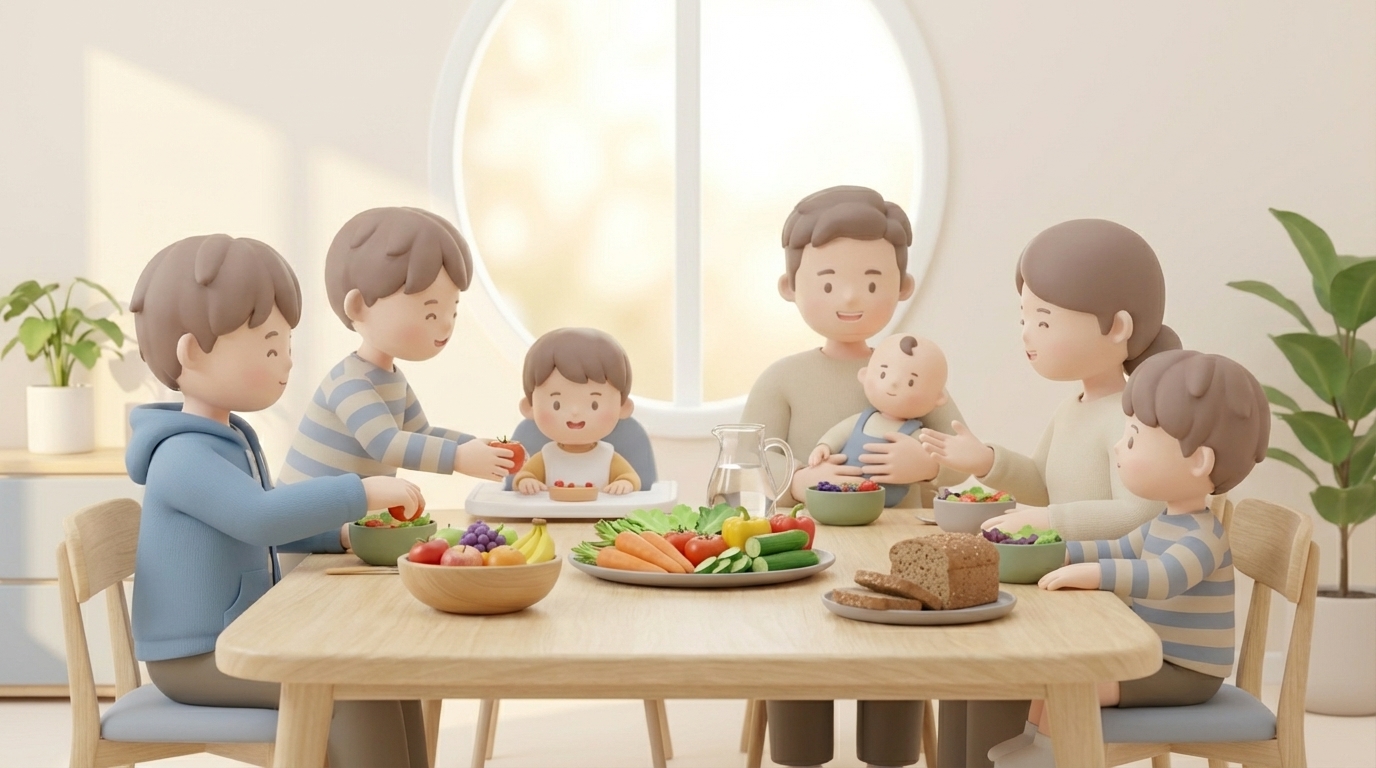
Family Meals: Try to have at least one meal a day – usually dinner – where all family members sit around a table. During this time, the TV and phones should be put away, and conversation about everyone's day should flow. This simple routine both strengthens emotional connection and provides a good opportunity for you to be a role model for healthy eating. Research shows that children who regularly eat with their families have both better dietary quality and are less prone to high-risk behaviors.
Teach Nutrition Principles and Label Reading: At this age, you can teach the child that their body needs different food groups to stay healthy: dairy, protein, grains, fruit, and vegetables. You can read food labels together and see, for example, how much sugar a soda has or how much salt is in a bag of chips. This increases their awareness and makes their choices smarter.
Healthy View of Weight: If your child is slightly overweight, you should not put them on a "strict diet" or constantly nag them about their weight. Shift the focus from the scale to a healthy lifestyle: more physical activity, reduction of unhealthy snacks, lighter homemade food. Assure them that their worth is not dependent on their weight, and address any medical concerns with a pediatrician to develop a scientific plan if needed.

Adolescent Nutrition (13 to 18 Years): Balance Between Independence and Supervision
Adolescence is a period when the body grows rapidly, individual identity is formed, and the need for independence peaks. Nutrition is no exception. The teenager may want to decide for themselves what to eat, which friends to eat out with, or what kind of diet to follow.
One of the common mistakes parents make at this age is completely letting go of supervision. With the justification that "they are grown up now and know what to eat," parents may become almost oblivious to what their child consumes throughout the day. As a result, a significant part of the teenager's diet may consist of fast food, soda, high-fat, and sweet snacks. Studies show that about half of teenagers consume no fruit or vegetables on a daily basis; this figure has a clear meaning: the daily diet of many teenagers is almost devoid of fresh food and full of empty calories.
On the other side, some parents become extremely controlling: everything the teenager picks up is scrutinized, they are constantly warned that they "are getting fat" or "that's not good for you," and sometimes they are even absolutely forbidden from eating certain foods. This approach can lead not only to defiance but, in some cases, to eating disorders (such as anorexia nervosa or bulimia nervosa).
Another important point is the role of family meals at this age. Despite the teenager's busy schedule, research shows that a high proportion of teenagers who regularly eat with their family have a healthier diet and are less prone to obesity, depression, substance abuse, and other harms. The complete elimination of these shared meals is one of the hidden but important parental mistakes.
In this period, specific nutritional needs also arise. For example, adolescent girls are more susceptible to iron-deficiency anemia due to the onset of menstruation, and adolescent boys require more energy and protein due to muscle growth. If the family's diet is poor in iron and protein without considering these needs, the probability of weakness, fatigue, and growth problems in the teenager increases.
In recent years, the consumption of energy drinks, high caffeine, and bodybuilding supplements has been on the rise among teenagers. Some turn to strong coffee or energy drinks to stay awake on exam nights; others use various powders for "quick muscle building" without consulting a doctor. Parental ignorance or complete leniency towards these behaviors is a serious mistake in adolescent nutrition.

Solutions for the Adolescent Age
Maintain Family Meals: Even if schedules are busy, try to eat dinner together a few nights a week. This time is not just for food; it's an opportunity to talk, listen to concerns, and maintain the bond. These simple gatherings have been linked by multiple studies to reduced high-risk behaviors and improved mental health in adolescents.
Dialogue, Not Lecturing: Talk to your teenager about nutrition, health, weight, and body image like an adult. Instead of scolding, provide information: explain to them what percentage of teenagers don't eat any fruit or vegetables, or what the long-term effects of excessive soda and fast food consumption are. Most importantly, give them a chance to voice their opinion and make the conversation two-sided.
Respect Independence, Within a Clear Framework: The teenager needs to feel they are the decision-maker of their own life. You can set general frameworks for healthy eating (e.g., that fast food is okay once or twice a week but not every day), but within these frameworks, allow them to choose. You can entrust them with a portion of the snack budget during weekly shopping and ask them to select a few healthy snacks they like.
Make Healthy Snacks Available at Home: Teenagers often come home hungry after school or physical activity and want something quick to eat. If the fridge is full of soda, industrial cakes, and sausages, the choice is obvious; but if homemade smoothies, yogurt, prepared fruit, unsalted nuts, and lightly salted popcorn are available, the chance of a healthy choice will be much higher. The point is to stock the home's shelves wisely instead of relying on "force."
Subtle Monitoring Instead of the Police Role: Instead of monitoring every bite the teenager takes and constantly warning them, establish a relationship based on trust and dialogue. You can agree with them that, for example, soda and fast food are not completely banned but must remain within a specified limit. When they feel their opinion is heard and you care about their health, they are more likely to consider balance themselves.
Awareness of Extreme Diets and Eating Disorders: In the age of social media, teenagers are exposed to all kinds of extreme diets, unrealistic body ideals, and pressure to be thin or muscular. If you notice your child suddenly eating very little, avoiding eating with the family, losing weight rapidly, or conversely, having periods of secretive overeating, these can be warning signs. In such situations, instead of scolding, inquire about the cause with compassion and without judgment, and seek help from a nutritionist or psychologist if necessary.
Intelligent Consumption of Caffeine and Supplements: Talk openly with your teenager about energy drinks, strong coffee, and bodybuilding supplements. Explain that too much caffeine can cause insomnia, anxiety, and heart palpitations, and many energy drinks contain a lot of sugar in addition to high caffeine. Regarding supplements, emphasize that any substance that is going into the body should be under a doctor's supervision; there is no miracle powder that builds the ideal body overnight.
Role Modeling in Lifestyle: Ultimately, no matter how much teenagers want to be different, they still take cues from their parents. If you prioritize healthy eating, physical activity, and sufficient sleep yourself, you convey a powerful practical message to them. Exercise together, cook some meals together, and enjoy trying new healthy foods as a shared experience.

Concluding Remarks
No parent is mistake-free. We all may do things out of love and concern for our child that we later realize were not the best choice. The important point is to recognize nutritional mistakes with awareness and flexibility and correct them step by step.
Healthy eating is not an overnight process; it is habits that are built gradually and through repetition from the earliest days of infancy to the end of adolescence. From exclusive breastfeeding in the first 6 months to the timely start of complementary feeding, from managing toddler picky eating to establishing order and balance in the elementary years, and from respectful accompaniment in the teenager's food choices to dialogue about a healthy lifestyle – each stage is an opportunity to lay the foundation for a "healthy relationship with food."
By gradually eliminating common mistakes – such as pressuring to finish the plate, using sweets as a reward, abandoning family meals, or ignoring sugary drinks and fast food – we can help our child develop a healthier body, a more vibrant mind, and a more balanced relationship with food.
The good news is that even a small change can be the starting point, such as adding one serving of fruit a day, eliminating soda from the dinner table, or dedicating a few nights a week to family dinner. Make one small decision today and establish it in your life.
Informed families raise healthier children; and today's healthy children will be tomorrow's capable adults and healthy society.
